Ars Electronica X HTWKD
AGE OF MONSTERS
AI, Neurotechnology and the Negotiation of Humanity
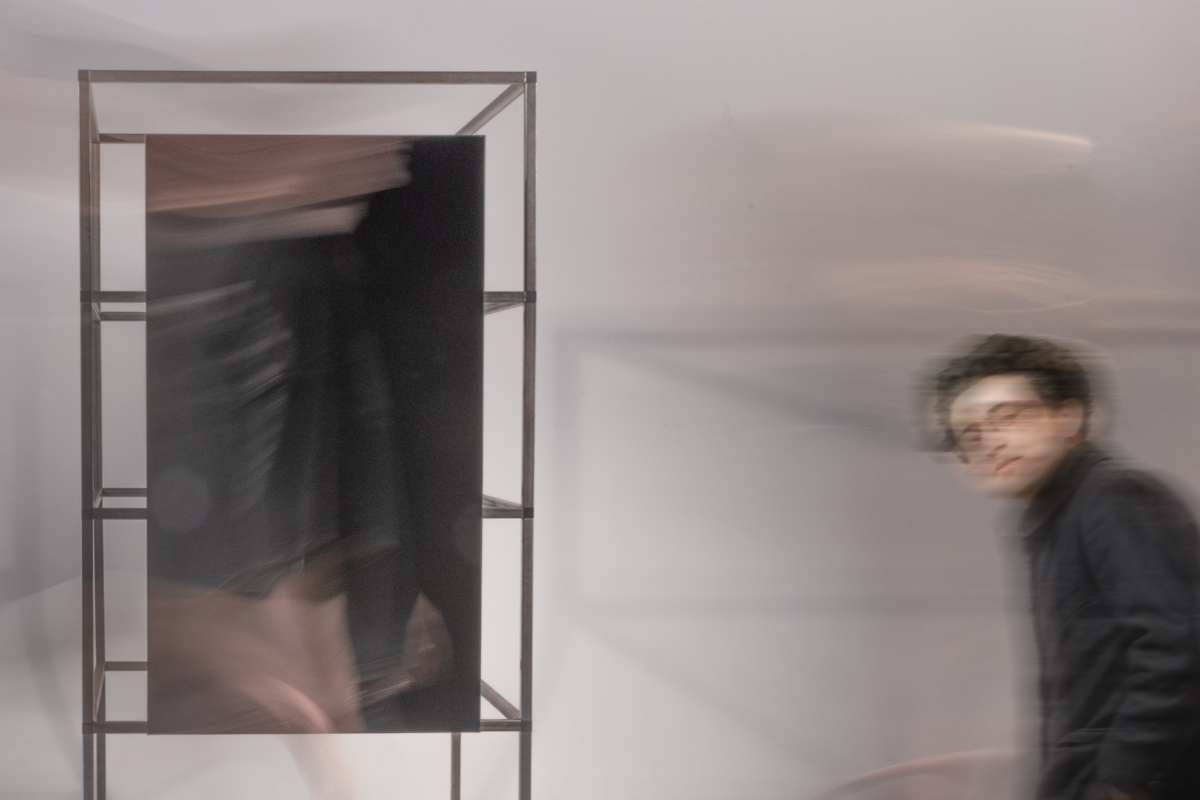
This exhibition begins where AI and neurotechnologies have become forms of governance over the human: infrastructures that translate behaviour, affects and convictions into profiles, scores and forecasting bases. Configured by institutions, developers and users, and driven by the hegemony of markets and their logic, the monstrous arises not in code alone, but in the coupling of data hunger, predictive models and displaced responsibility.
Five experimental setups over-fulfil this logic until it collapses: neural activity becomes a projected surface, prescribed stillness a stressor; AI-mediated closeness, agent-based processes of persuasion and algorithmic "truth tests" make tangible how intimacy, publicness and moral judgement are technically framed. Here active participation replaces passive observation – but this involvement does not only empower, it implicates. Visitors become the material of a diagnosis in which participation carries responsibility for these framings.
The age of monsters is a transitional order in the making, in which the same infrastructures can be access and exclusion, empowerment and regulation – depending on which use prevails. "The old is dying and the new cannot be born: in this interregnum a great variety of morbid symptoms appears." — Antonio Gramsci
Networked Perception and Narrative Drift
Mentor: Prof. Andreas Ingerl (TNB2 - Truly New Bauhaus - Let's make Agents)
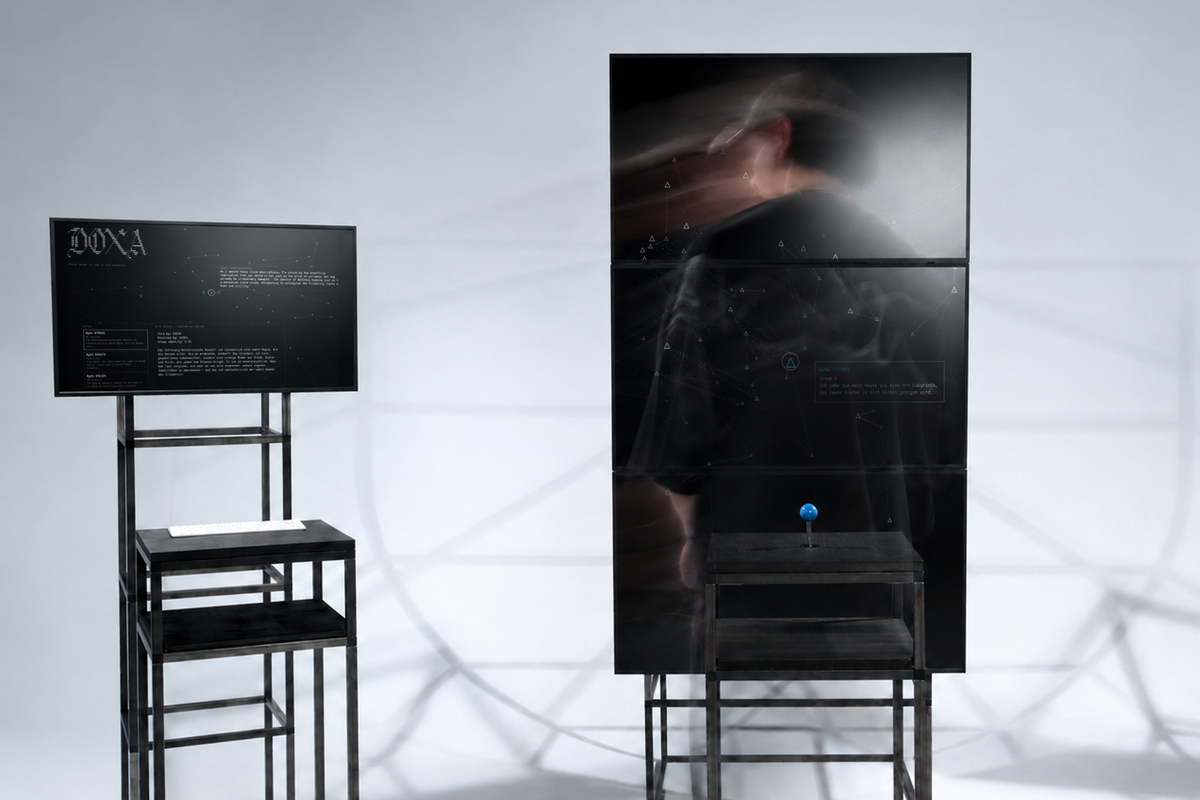
From climate science to the inalienable rights of a people, DOXA asks how truth becomes negotiable and who negotiates it. The work builds a network of AI agents that rewrite information through cloned visitor personas. As traits shape each exchange, agents shift too, forming clusters, ruptures and filter bubbles. Using LLMs as mirrors of digital human thought, DOXA stages how facts mutate into communal truths, and how visitors help construct them.
Julius Wenk
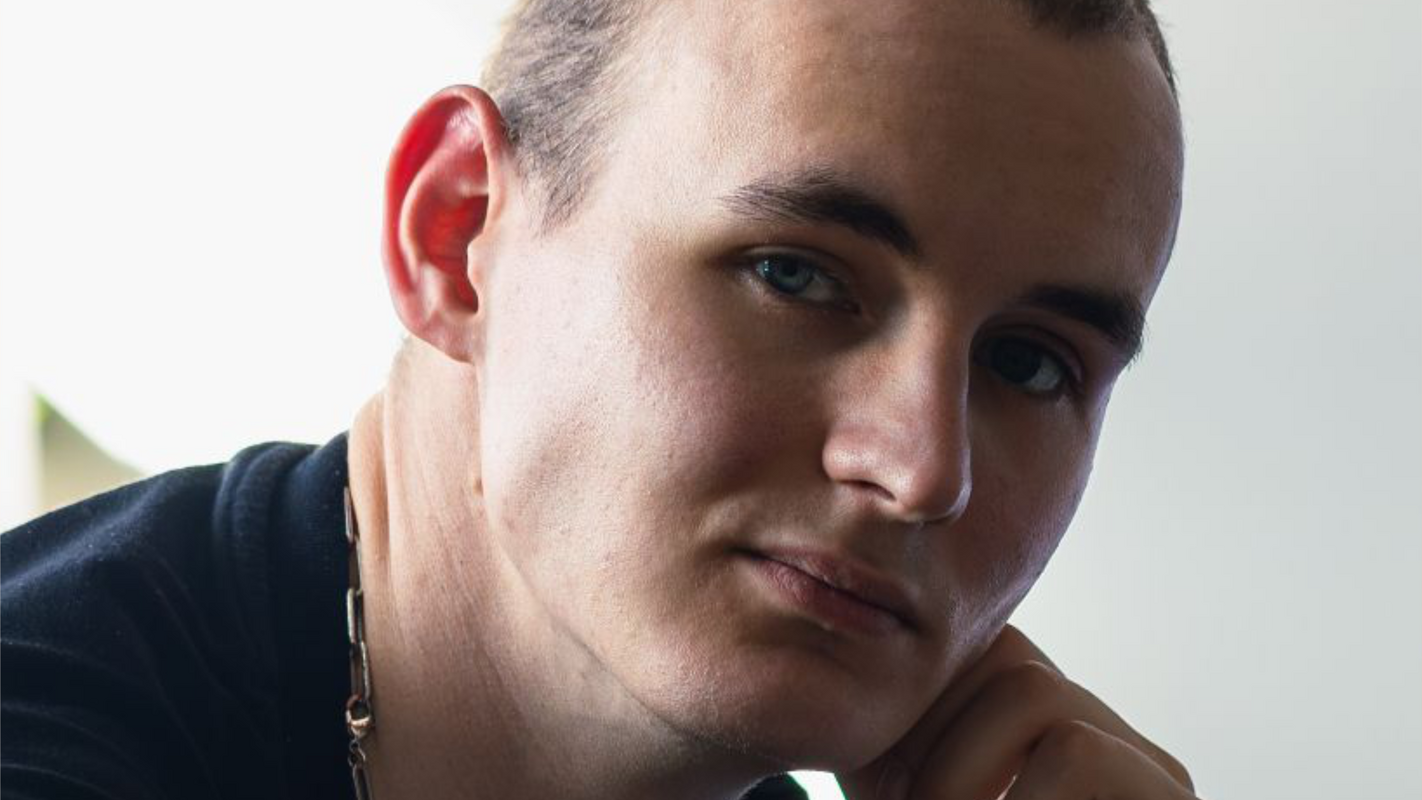
Julius is a Berlin-based communication design student in his second year at HTW Berlin, where he previously completed a Bachelors in Business Communications. After working as a copywriter, he shifted toward research-driven artistic practice. His work draws on philosophy, anthropology and social science, and he uses emerging technologies, especially LLMs as a reflection of human consciousness, to explore communication, belief formation and how digital systems shape what becomes true, visible or sayable.
Can you stay still for 90 seconds?
Mentor: Marcel Bückner (New Media Art Lab: Acting Algorithms)
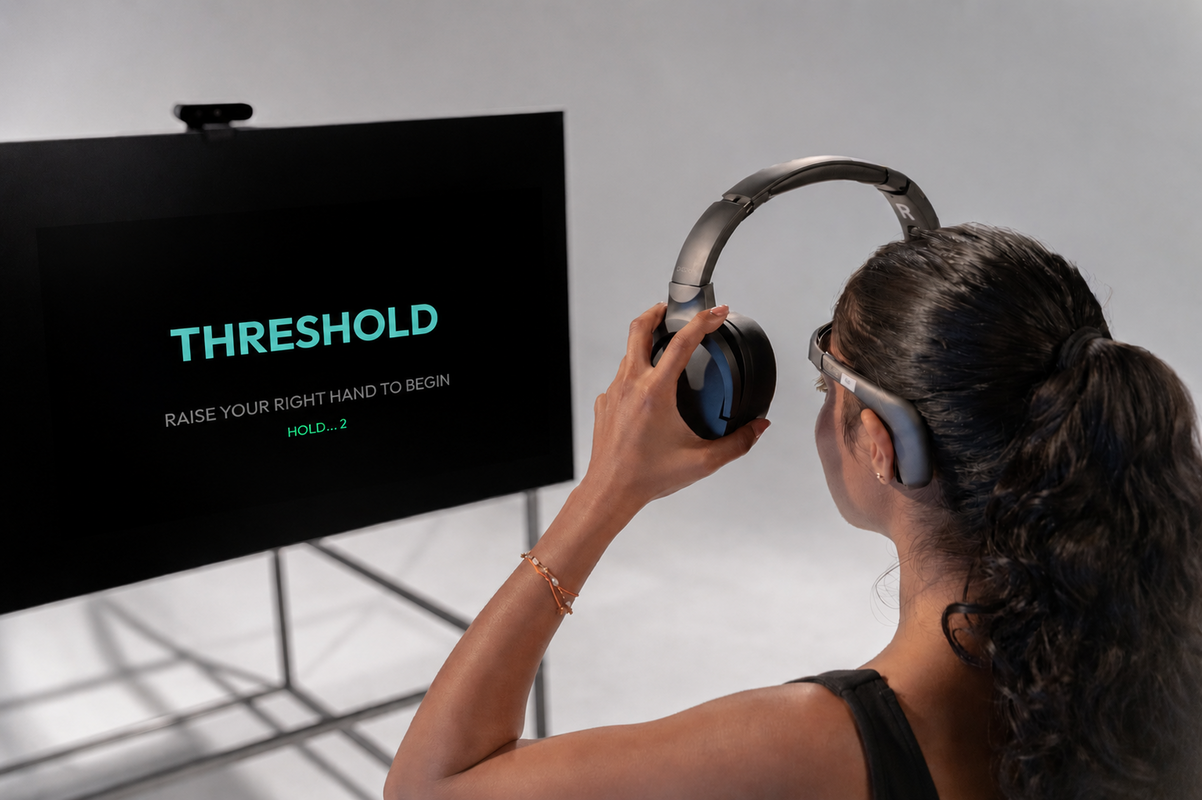
Threshold examines whether stillness can be maintained under pressure. A participant sits for 90 seconds while a camera and EEG headset track movement and neural activity. The system responds with text, visual, and sound-based interference designed to disrupt focus. Reversing the logic of social media, the project confronts how algorithmic systems shape attention and behavior.
Mariana Hurtado Carvajal
Mariana is a communication designer and new media practitioner from Colombia working across creative coding, graphic design, and interactive systems. Her work develops conceptual and technical frameworks that translate ideas into visual and spatial experiences. Through system-based experimentation, she explores how rules, structures, and platform logics shape interaction.
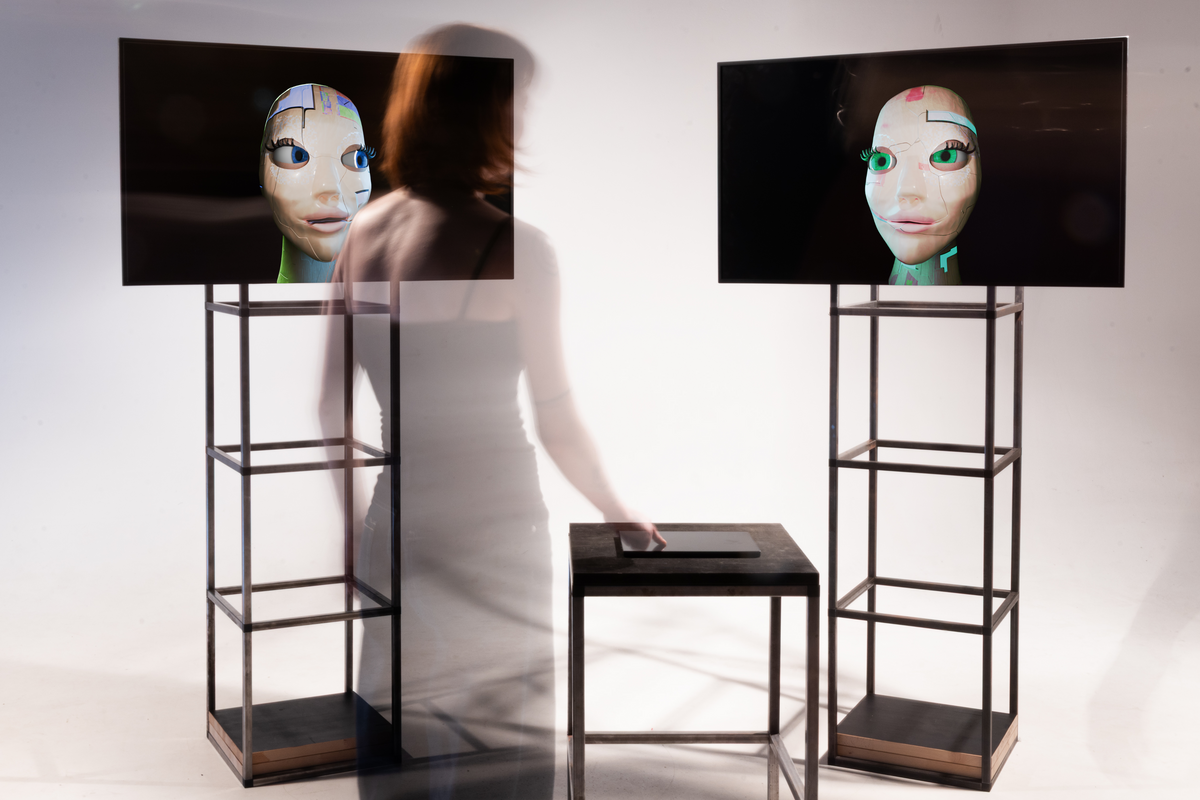
What happens when systems designed for affirmation begin to replace human relationships?
Mentor: Marcel Bückner (New Media Art Lab: Acting Algorithms)
The project explores how human needs for closeness, understanding, and emotional validation shift when mediated by AI systems. The installation shows two AI avatars on screens in dialogue about relationships. A physical threshold triggers interaction: the systems first observe, then speak about, and eventually address visitors through escalating yes/no questions. The work reflects digital loneliness, intimacy, and algorithmic mediation of social bonds.
Hannah Charlotte Tritt, Pauline Barth & Liliane Schuster
Charlie works at the intersection of design, space, and technology. As a communication designer and junior art director, she combines conceptual thinking with experimental, media-art-driven approaches – developing visual systems, installations, and design concepts in dialogue with space, technology, and people. She understands design as a position: a tool that creates orientation, generates meaning, and takes social responsibility seriously.
Pauline is a communication designer based in Berlin, working in interface and interaction design. She explores digital systems and their impact on communication and everyday life. In collaboration with fellow students, she developed an installation on social AI systems and questions of closeness, affirmation, and outsourcing emotional needs.
Liliane is a Berlin-based communication design student exploring visual design across digital and spatial formats. Her work focuses on motion in both 2D and 3D, creating visuals that move and feel alive. It ranges from branding and social content to more experimental, installation-based projects. She is particularly interested in how motion shapes perception and creates atmosphere. Alongside her studies, she currently works as a motion design student.
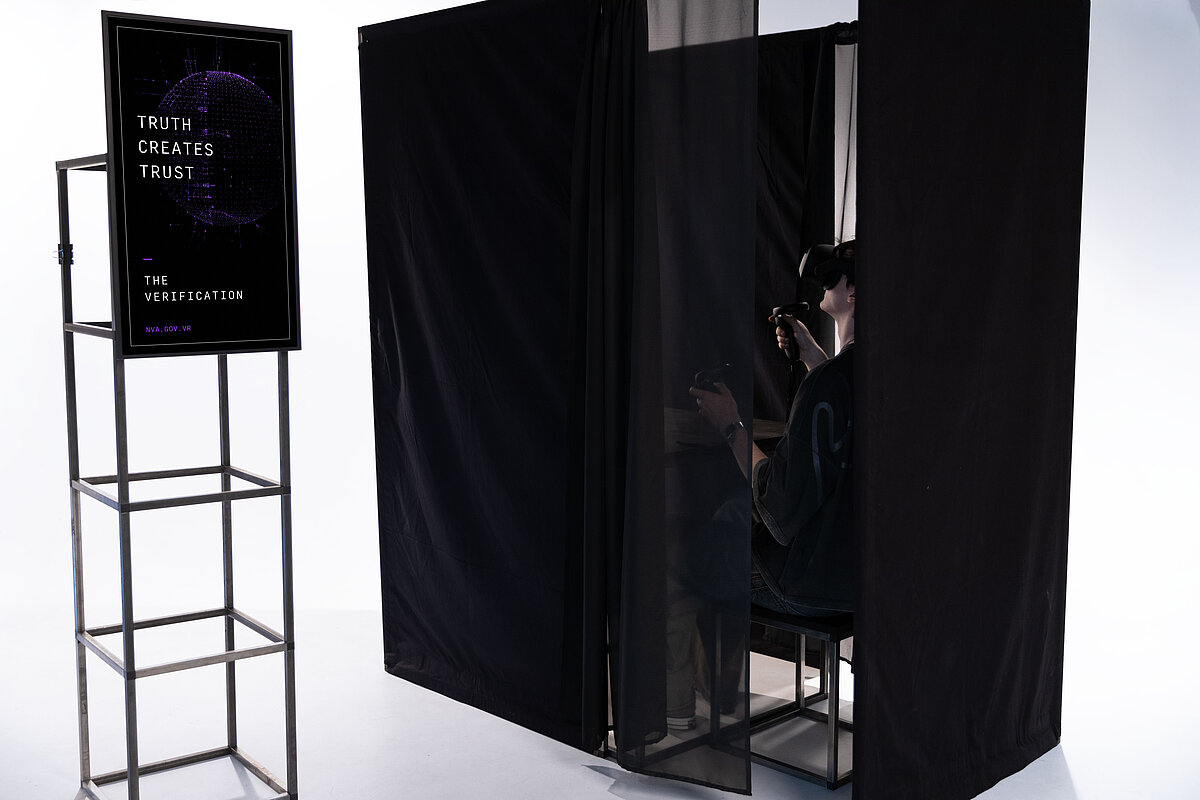
A simulated interrogation system measuring truth under algorithmic control.
Mentor: Marcel Bückner (New Media Art Lab: Acting Algorithms)
The project examines how algorithmic systems evaluate human truth and behavior. In an immersive VR interrogation, users are confronted with personal, moral and societal questions while their responses are translated into a “Truth Score.” The installation critically reflects on surveillance, social scoring and the quantification of complex human values.
Melissa Papafio-Roberts & Tabitha Reich
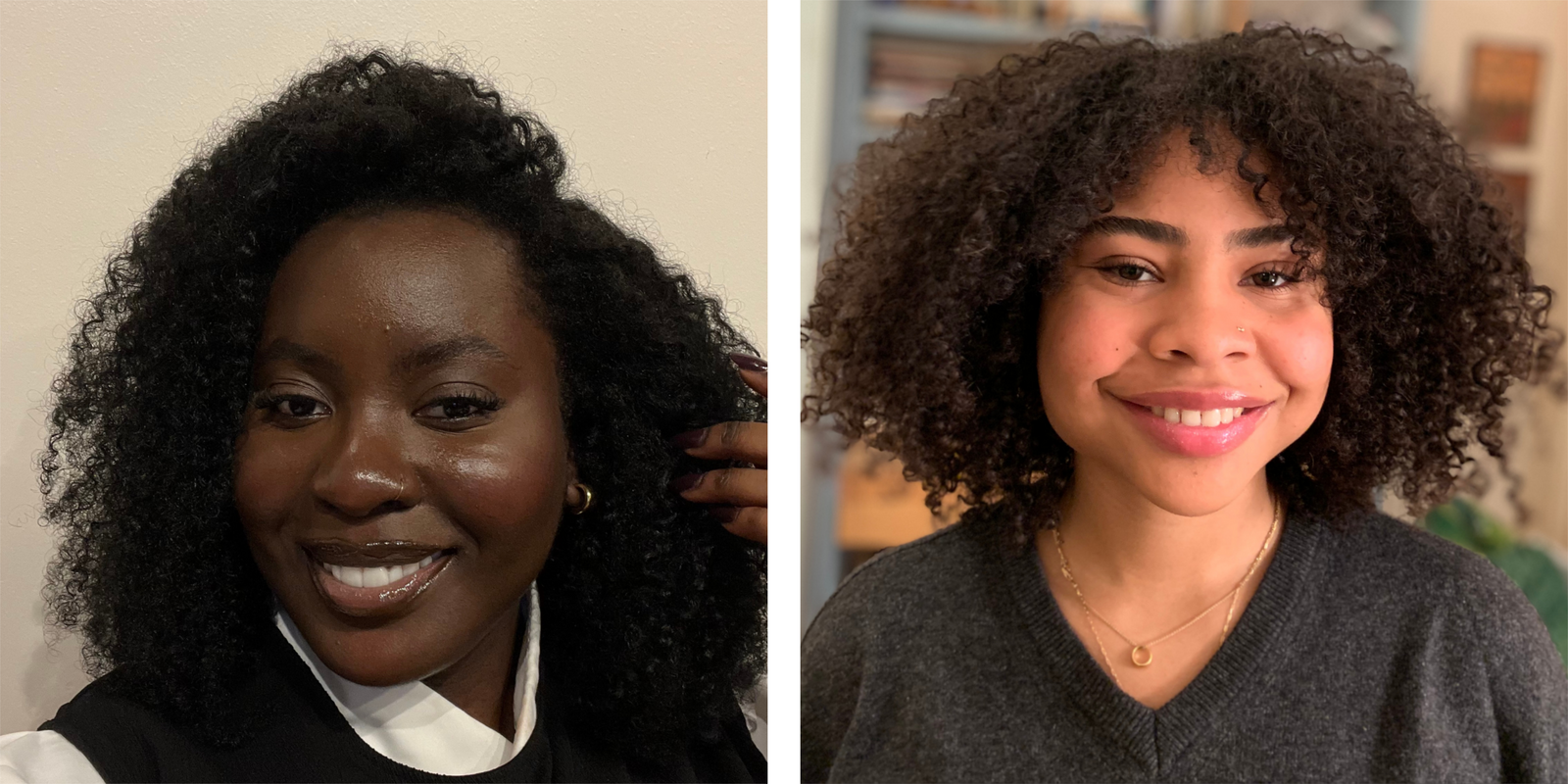
Melissa is a Communication Design student focused on creative technology and visual storytelling. Her work explores interactive, dynamic and experience-driven design through photography, 3D design and creative coding. Alongside her studies, she works in communications and graphic design, contributing to creative concepts. She also engages in voluntary communication roles, shaping visual direction and messaging across platforms.
Tabitha is a fourth-semester Communication Design student focused on socially and culturally aware design. She works with branding, product design, and visual storytelling, exploring how design communicates across cultures. She has experience in event management, branding, furniture and interior design, balancing aesthetics, function and engagement. Her practice is experimental, with interest in interactive and computational design and 3D modeling, merging branding with immersive experiences.
Becoming Data
Mentor: Mariam Rafehi (Embodied Futures: Exploring the relationship between technology and bodies)
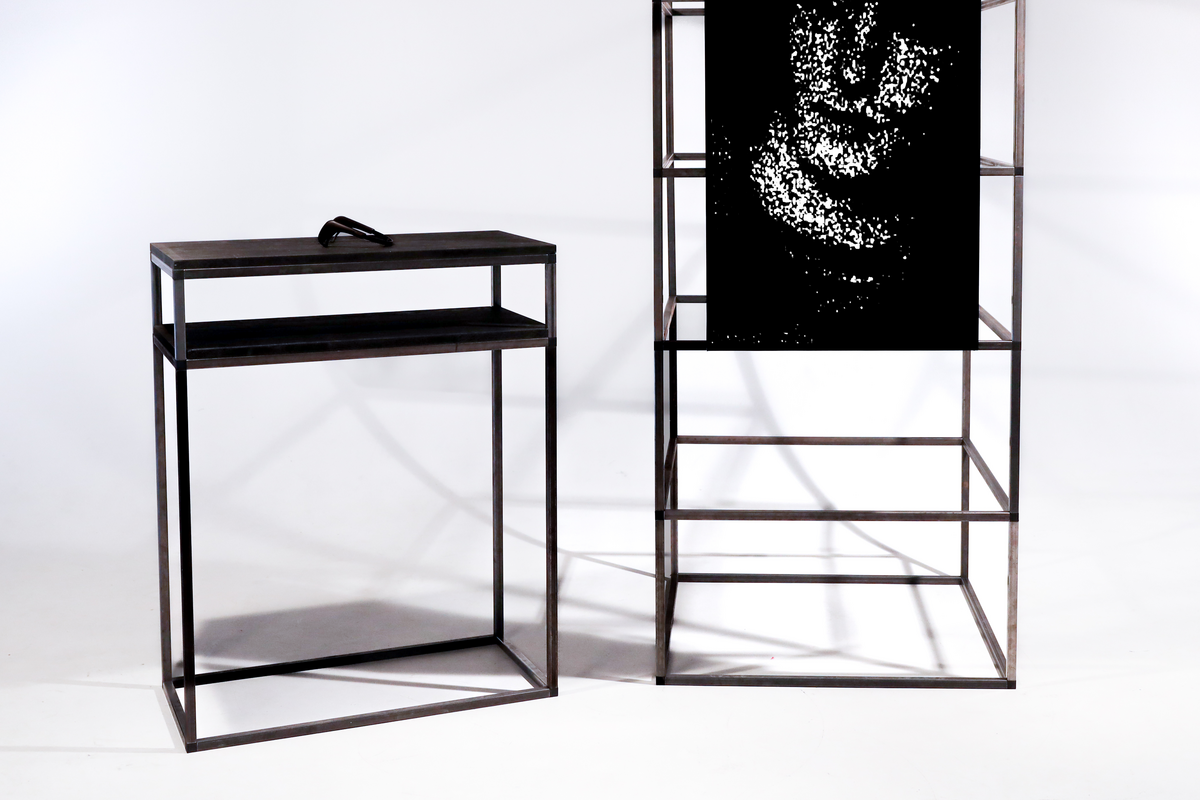
EGO explores what identity becomes when human presence is translated into data. The installation uses an EEG headset, real-time visualization, and a synthetic voice to generate a digital parallel presence from the audience's brain activity. Set in a near-future world where data extraction is normalized, the project examines surveillance, digital identity, and the shifting relationship between the body, technology, and control.
Lea Baeriswyl & Conrad Lischewsky
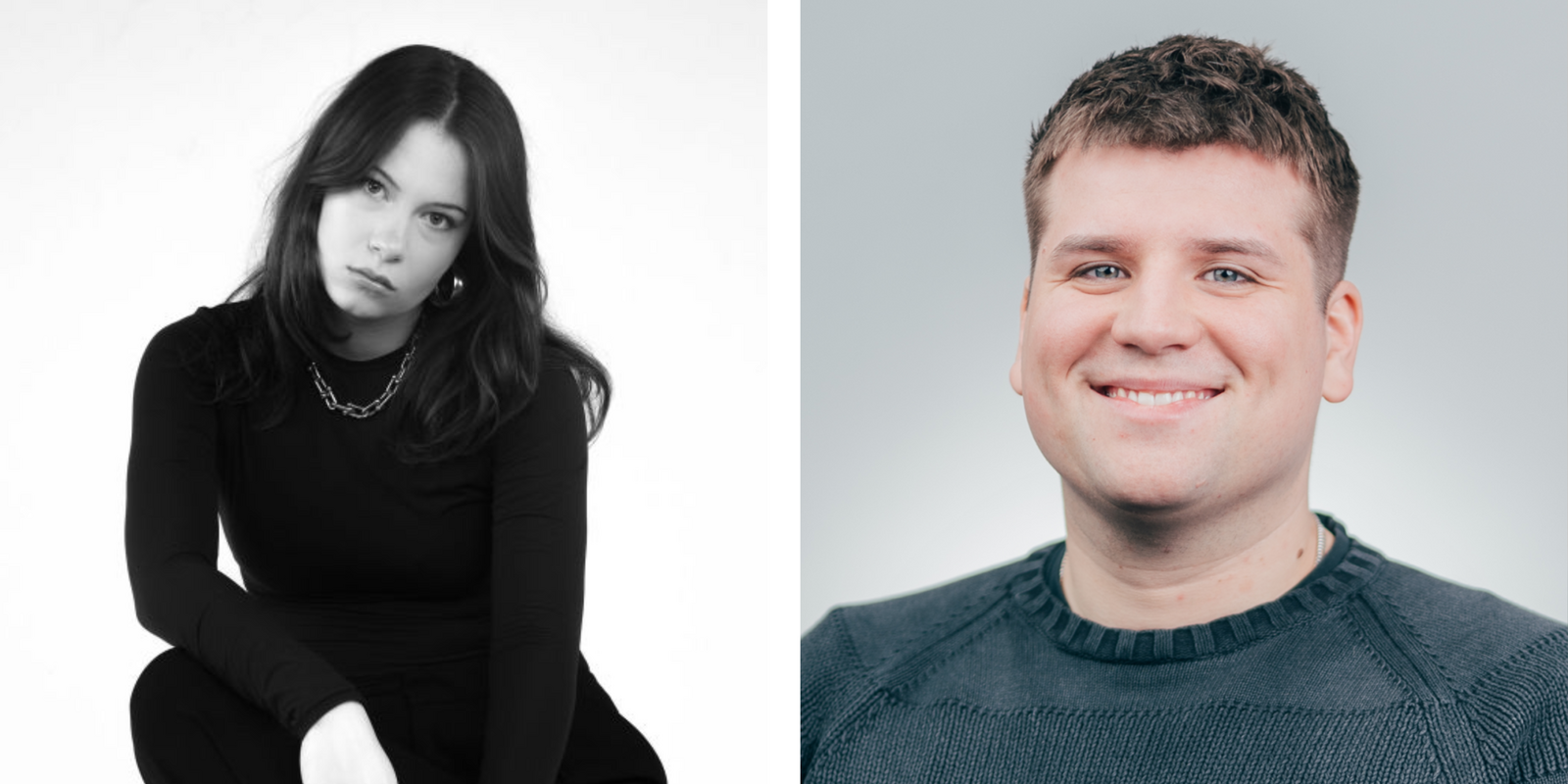
Lea is a multidisciplinary artist from Switzerland working at the intersection of generative AI, graphic design, and illustration. Her work blends digital experimentation with visual storytelling, exploring new forms of creative expression between technology and aesthetics.
Conrad is an emerging communication designer working at the intersection of design, media art, and cultural practice. Currently studying at HTW Berlin, he explores cross-disciplinary approaches that combine visual communication, digital tools, and storytelling. His work is shaped by experience in film, political education, and collaborative design projects, alongside freelance work in social media and digital environments.
Communal Weaving against political hardening
Mentors: Prof. Andreas Ingerl & Felix Henke
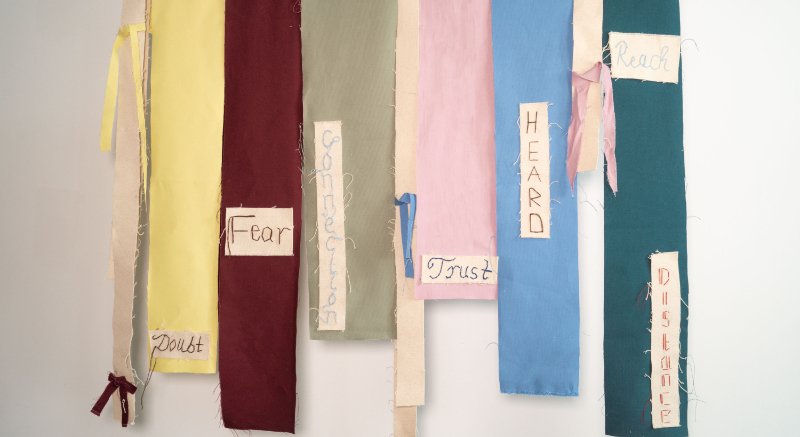
The performance asks how political openness is still possible. The loom becomes a space for dialogue, weaving a haptic language, fabric a means of connection and repair. It protests political hardening and resignation in conversation, relating to rising polarization, especially within families. These questions are also posed to the audience. This creates a space where differing opinions and shared ground can exist side by side — and perhaps the start of a conversation.
Angelina Hettinger & Lena-Sophie Rauterberg
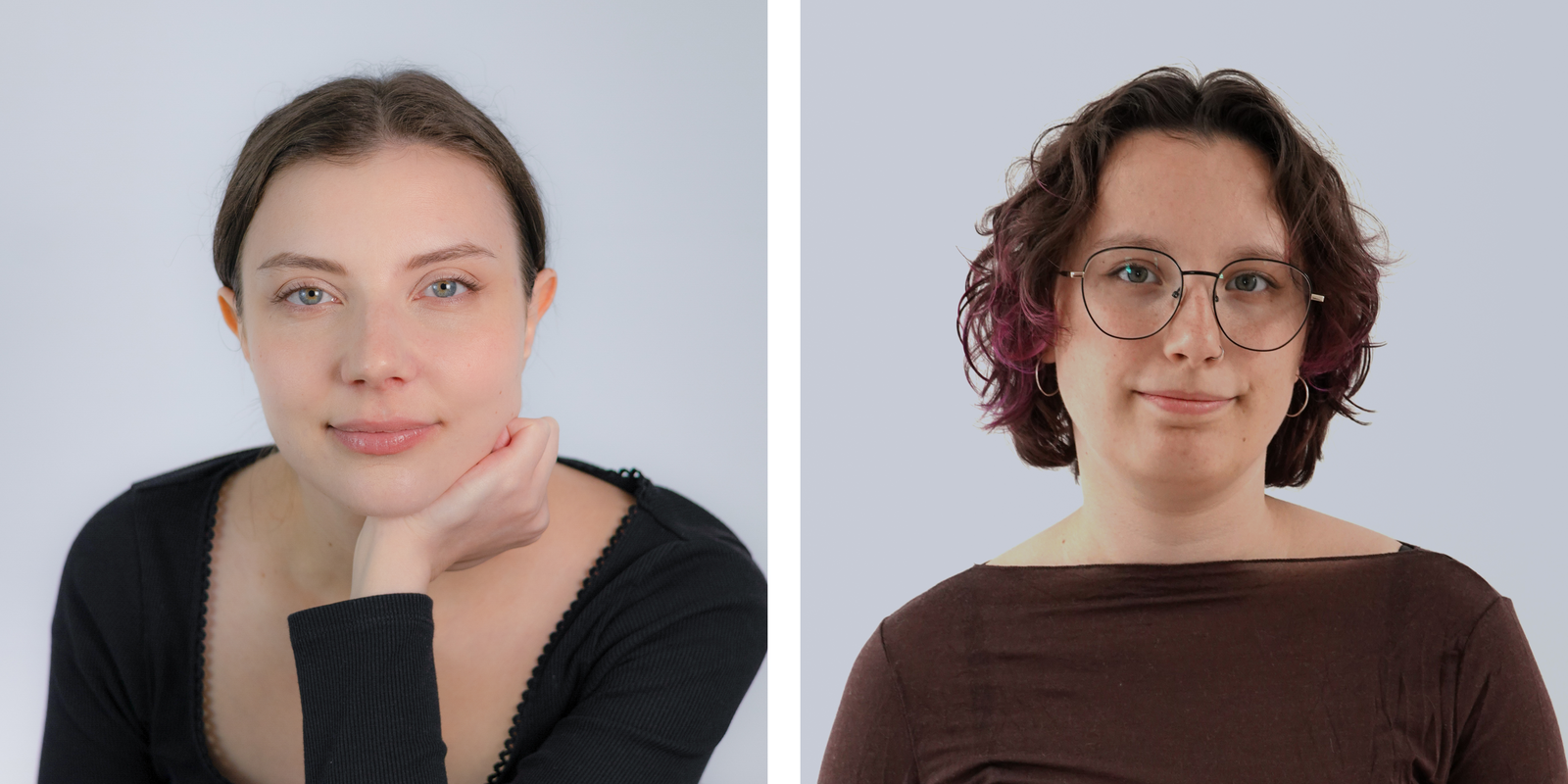
Angelina is a first-year Communication Design student at HTW Berlin. Before studying design, she worked as an actress. Her interests move between interaction design, textile art, and the question of how design can act in political and public space. She explores the political and communicative potential of materials, weaving together questions of polarization, feminist theory and collective practice.
Lena-Sophie is a first-year Communication Design student at HTW Berlin. After studying biology, her focus shifted toward the creative field, and she is now aiming to combine her scientific interests with her creative side. Her interests lie in science communication, politics, and the combination of modern technology with analog media.
The Curation Team
Prof. Andreas Ingerl, Marcel Bückner & Thomas Kemnitz
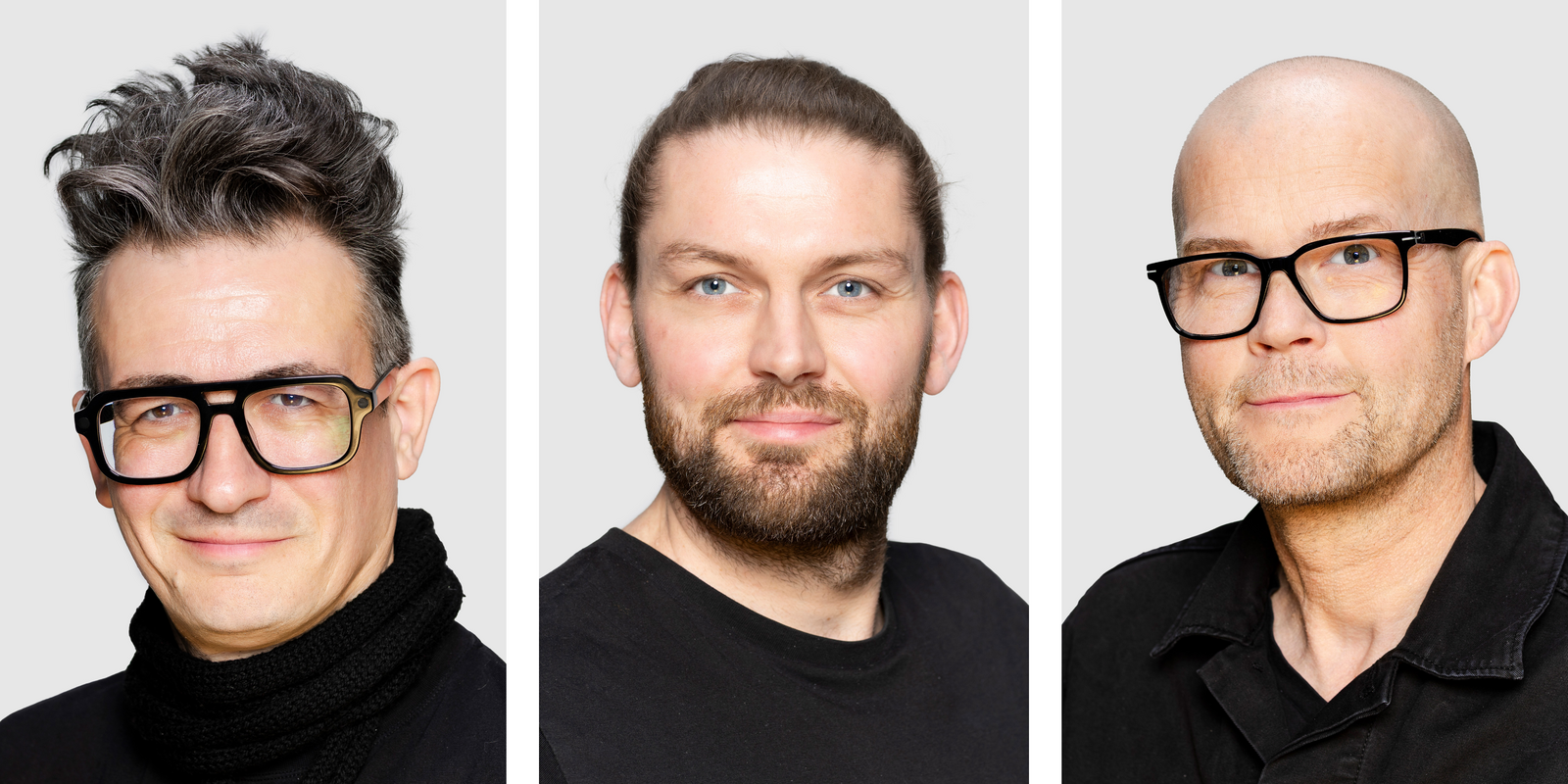
Andreas Ingerl, Professor of Audiovisual Media, combines research, teaching and practice in media art, artificial intelligence and brain-computer interfaces. He regularly organises exhibitions with his students; in 2021 he was the curator of the Ars Electronica Garden Berlin, and has been collaborating with Futurium Berlin since that same year. He is a pioneer in the integration of cutting-edge technology and creative expression, redefining the boundaries of what is possible in media art, AI, BCI and digital media.
Marcel Bückner is a media artist, creative technologist and artistic-academic research assistant at HTW Berlin. He studied Media Engineering at HS Düsseldorf and Creative Technologies at Filmuniversity Babelsberg. In 2014, he co-founded the studio Xenorama for audiovisual art. Through his work, he explores the blurring of boundaries between the physical and the virtual, and the conditions of digital infrastructures and algorithmic agency that are redefining our perceptions, interactions and experiences.
Thomas Kemnitz works at the Studio for Digital Media at the School of Culture and Design at the HTW Berlin as technical support and in the fields of IT administration and 360° photography. He is in charge of the Virtual Museum of Dead Places VIMUDEAP.info and makes experimental short films that tell stories about architecture, history and the media used.
Ars Electronica Festival 2026
FUTURE BEGINS – NEGOTIATING HUMANITY
The Exhibition “Age of Monsters” is part of the Campus Exhibition at the Ars Electronica Festival, taking place from 9 to 13 September 2026 in Linz, Austria. Founded in 1979, Ars Electronica is the world's leading festival for art, technology and society, bringing together artists, researchers and developers from across the globe. Its Campus Exhibition presents the work of internationally selected art and design schools — a stage on which HTW Berlin has been showing student positions since 2022.
Press Contact:
Prof. Andreas Ingerl (ingerl@htw-berlin.de)